Magazine
Press houses, hill laws and wormwood wine: the food and wine heritage of the Balaton wine regions
Hill laws, years carved into lintel beams, Kisfaludy’s press house and the kéknyelű grape. How wine hills, cellars and hospitality grew together in the Balaton wine regions.
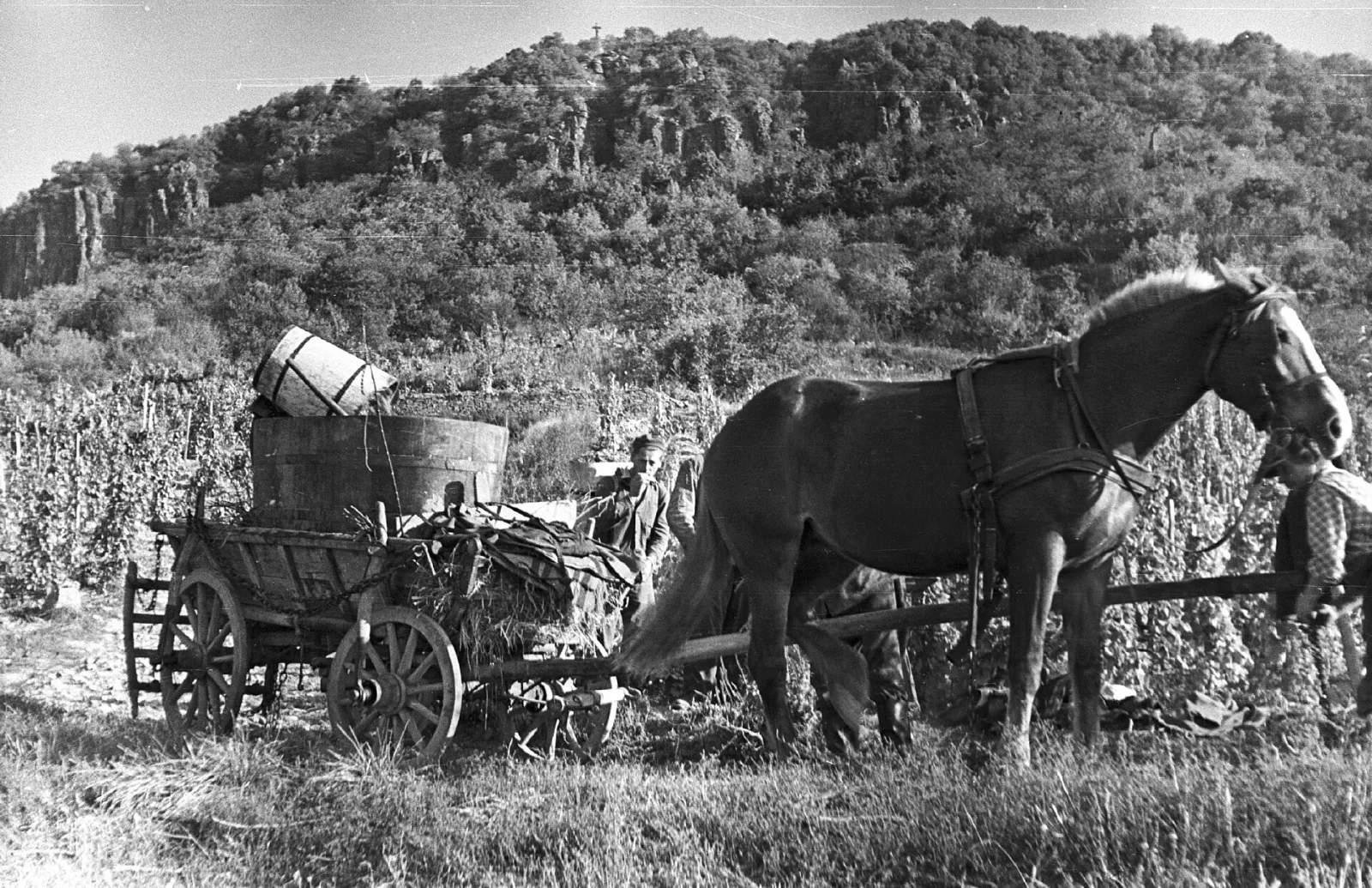
In the autumn of 1959, people are picking grapes on the slopes of Badacsony. In the background of the photo, on the hilltop, stands the Ranolder Cross, named after a bishop of Veszprém. The pickers are working the same slopes that military surveyors already mapped as continuous vineyard at the end of the 18th century. By evening the harvest goes into the press house. That is where the wine was trodden, pressed and stored, and often drunk too. A good part of Balaton hospitality started in these stone houses, long before the beach kiosks and the hotel rows.
The wine hill that was not a geographical term
In the 18th and 19th centuries the word “hill” meant something different around Balaton than it does today. A wine hill was a self-governing community with its own rules and its own leaders. Nobles, townspeople, serfs and cottagers could all own vines there, and all of them owed obedience to the same hill law, known in old Hungarian as the artikulus. The owners chose the hill master and the jurors from among themselves, and these also judged minor disputes. A Transdanubian case study on how wine hills were governed
The rules are old. In Rada (today Nagyrada) in Zala County, hill-law-style bans already protected the vines in 1569. Anyone who stole from another’s vineyard or damaged the boundary markers paid 1 forint 33 dénár. Zala County’s detailed hill law of 1752 was renewed and extended in 1769. The modern hill community system, set down in national law, was created by the act of 1894. Zsigmond Csoma on the history of hill communities
In Csopak the minute book of the Free Csopak Wine Hill Community survives. Between 1754 and 1880 it recorded the hill’s important events and summed up the rules of cultivation in 33 articles. The original is kept in the Veszprém County Archives. The local heritage description of Csopak olaszrizling
The hill was guarded at night as well. The ethnographer Aurél Vajkai saw the old order still working in a Veszprém County village in the 1930s. Once or twice a week, on winter nights, the hill judge went out with the hill masters to look around. The hill master would lean a stake against the press house door, so that in the morning the owner knew a patrol had passed. Vajkai’s note as quoted in the study above
After the war the hill communities disappeared for decades, and only the act of 1994 brought them back. Today the Badacsony wine region is made up of four hill communities: Badacsony, Badacsonyi Borfalvak, Káptalantóti-Csobánc and Szent György-hegy. Badacsony wine region, Hungarian Wikipedia
Who owned the hill?
The Benedictine abbey of Tihany was founded by King Andrew I in 1055. According to the official agricultural marketing description of the Balatonfüred-Csopak wine region, the vineyards of Füred and its surroundings passed to the abbey in 1211 and stayed there for centuries. The same description cites a record from 1082 for the bishop of Veszprém’s vineyards in Csopak. That date deserves caution. Linguistic research has shown that the Veszprém chapter’s property list, dated 1082 under the name of King Ladislaus, was actually written in the 1320s. The wine region’s description · Katalin Pelczéder on the forged 1082 list
In the early 14th century the diocese of Veszprém built up extensive vineyard estates in the Balaton Uplands. From the 18th century onwards aristocratic families competed for the vineyards of Badacsony, and their cellars and press houses still stand. The Hungarian Wikipedia article on the wine region lists the Malatinszky and Ibos manor houses, the Kisfaludy House, the Róza Szegedy House, the Lessner wine house, and the Esterházy and Tarányi press houses. Balaton Uplands wine region · Badacsony wine region
But it was not only the lords. According to Aurél Vajkai’s 1966 study, at the time of the first military survey, between 1780 and 1786, the southern slopes of Balaton’s north shore were covered by almost continuous vineyards, and most of them were in the hands of serfs. Three quarters or more of the villagers owned vines. Much of Almádi’s vineyard belonged to craftsmen from Veszprém, while in Vörösberény the owners came from Szentkirályszabadja and Szentgál, and in Paloznak and Csopak from Nemesvámos and Fajsz. Aurél Vajkai: The press houses of Balaton’s north shore (1966)
What the lintel beams tell us
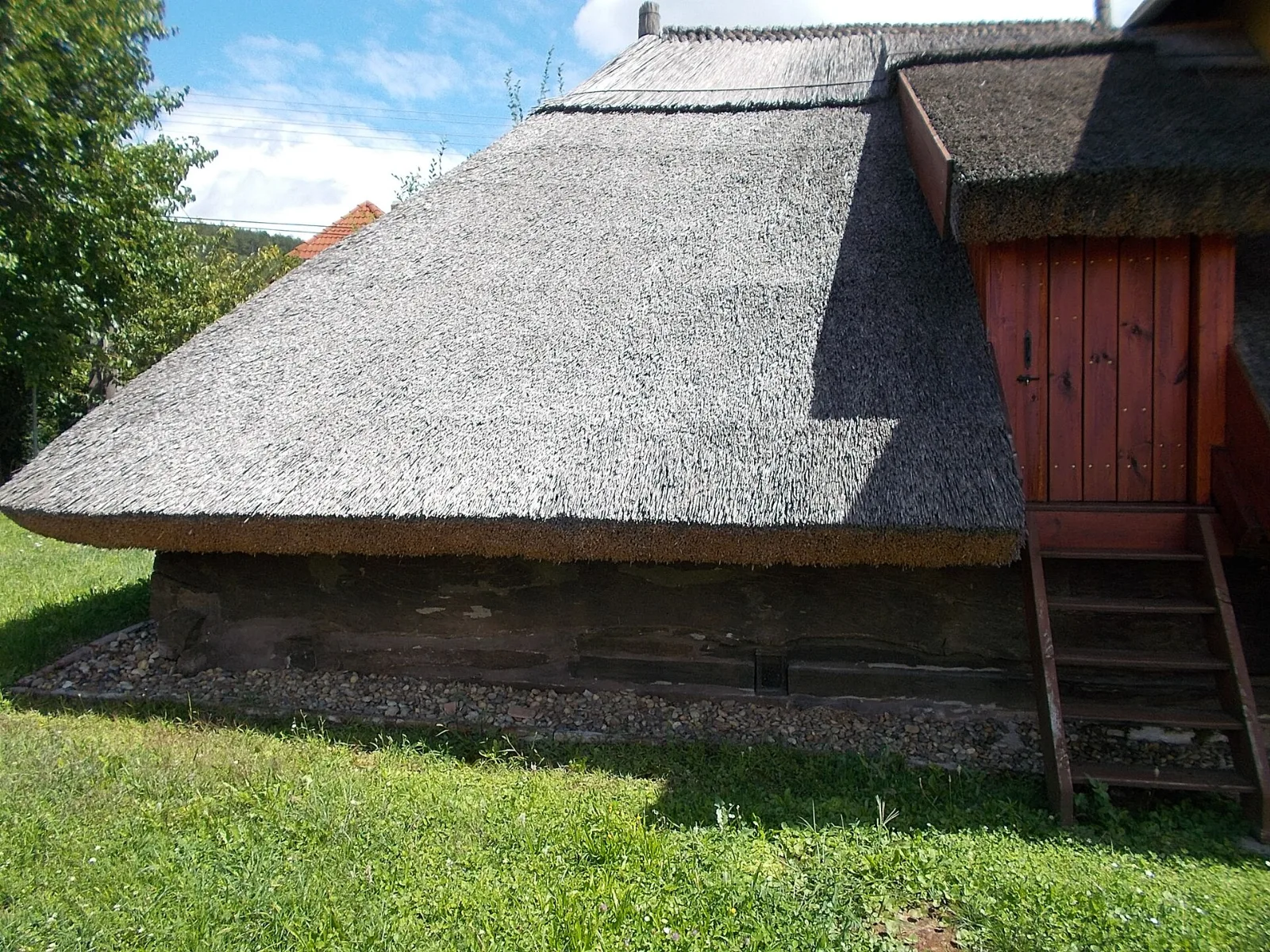
The press house is the house of the wine hill. On the north shore Vajkai distinguished single-storey and two-storey types. The simplest had a single room; in the richer ones a living room, the press room and the cellar stood under one roof, sometimes with a stable too. They were built of stone, red stone, brick and timber, with reed or thatch roofs, later tiles. The cellar was vaulted and covered with earth. Vajkai 1966
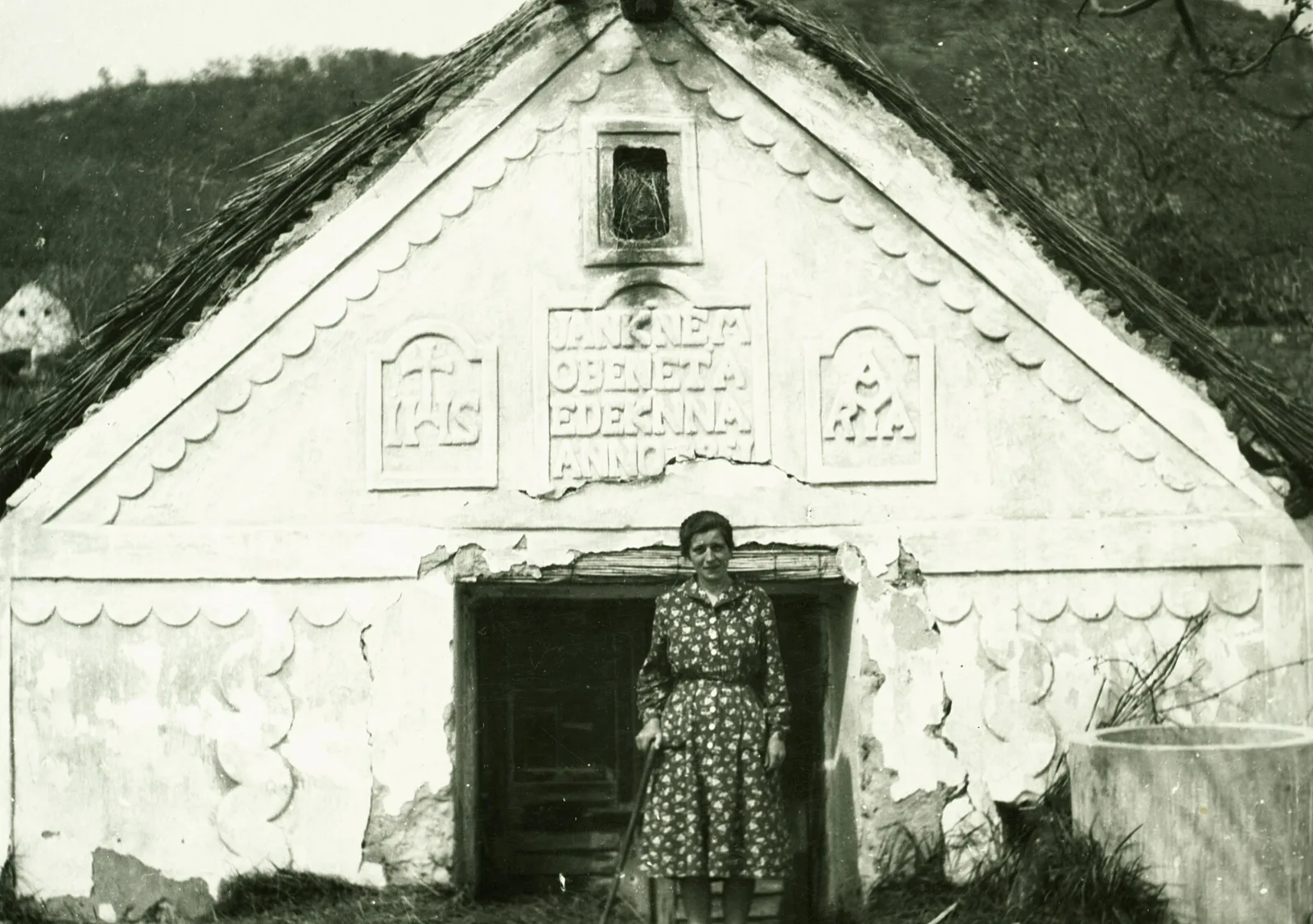
Often the buildings themselves give away their age. The builders carved the year and their names into the lintel beam. The oldest dated relic in the area studied was a vaulted earth cellar from 1707 in Vörösberény. A log cellar of 1733 was recorded in Kenese, a press house of 1747 in Alsóörs, a beam of 1806 in Lovas, and the inscription “ANNO 1819” in Kenese. In Vászoly the beam read: “AEDIFICATOTTA ERNHOFER JÁNOS ANNO 1842”. The room of the Csonka press house in Csopak was decorated with Empire-style frescoes. The gables carried stucco grape bunches, coats of arms and inscriptions. Vajkai 1966 · Vajkai 1963
Vajkai also noted what had already gone. The Benedek Jankó press house of 1851 in Szigliget and the two-storey building with a loggia porch of 1856 in Badacsonyörs were no longer standing by the mid-1960s. Many press houses were lost in the 1950s, when life on the wine hills changed.
In Gyenesdiás a particularly old piece survives. The Darnay cellar is built of log timber, and the year 1644 can be read on its main beam. The thick planks were joined without iron, with notched and slotted joints. A press house was added in the mid-19th century. It was saved by Béla Darnay-Dornyay, a former director of the Balaton Museum in Keszthely, and in 2012 it reopened, restored, as a wine museum. Vines and old beam presses stand in the yard. On the 2012 reopening
Saint Donatus in the chapel
The chapels of the wine hills are mostly dedicated to Saint Donatus, the vine growers’ patron against hail and lightning. Above Balatonlelle the Majthényi family built the press house, the cellar and a chapel dedicated to Saint Donatus the Lightning-Chaser all at once, in 1784. The former vinedresser’s house is now a restaurant. Majthényi Présház in the BalatonEats guide
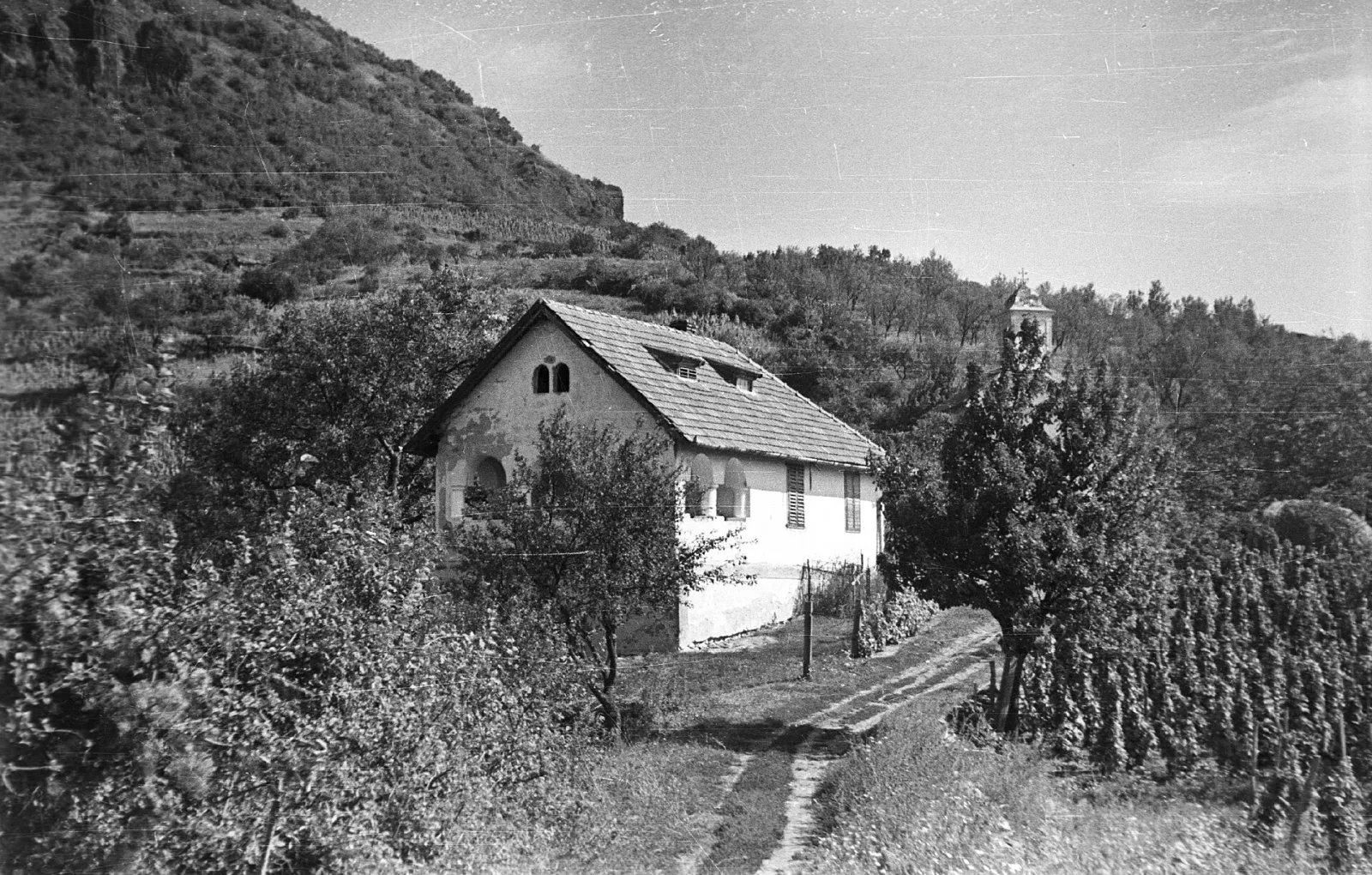
In Hegymagas, on the side of Szent György-hegy, the Tóti-Lengyel family built a peasant-baroque press house in the 1780s that later became known as the Tarányi press house. Its facade is decorated with statues of the ancient gods of viticulture, and its double cross-vaulted cellar covers 270 square metres. In the 1970s it housed a restaurant aimed at West German tourists, and in 2020, after a thorough heritage restoration, it became a hospitality venue again. The press house’s history in HVG
Badacsony: a poet’s press house and Róza’s wormwood wine
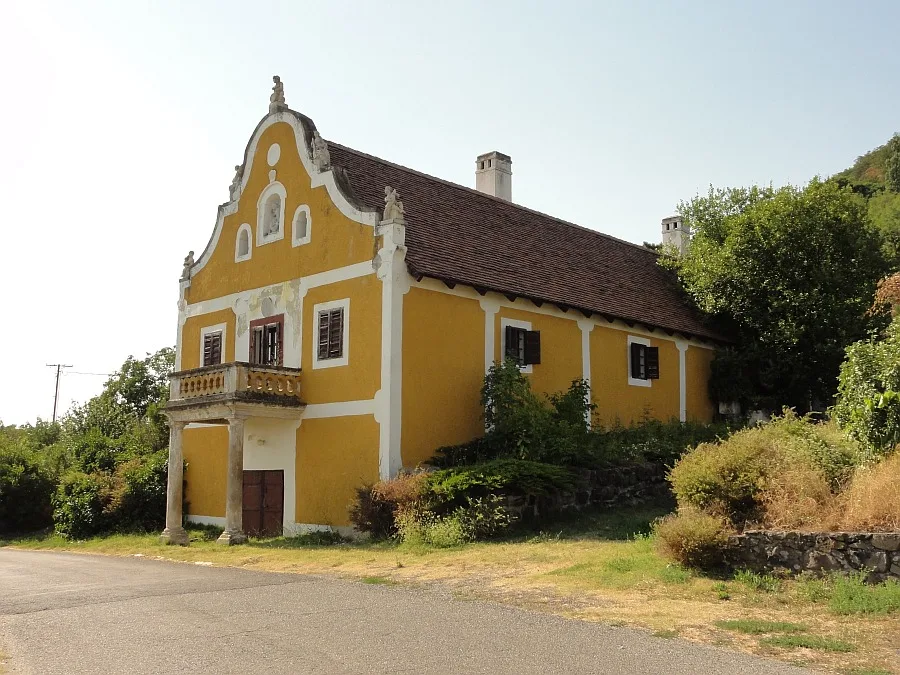
Sándor Kisfaludy married Róza Szegedy in 1800; he had written his love poems to her under the name Himfy. Róza brought the Badacsony estate into the marriage, with the press house and the building next to it. The late baroque Róza Szegedy House is now a literary and wine museum. In the 18th and 19th centuries Badacsony’s ürmös, a wormwood-flavoured wine, won a reputation comparable to Tokaji aszú. Badacsony wine region, Hungarian Wikipedia · The story of the Kisfaludy House
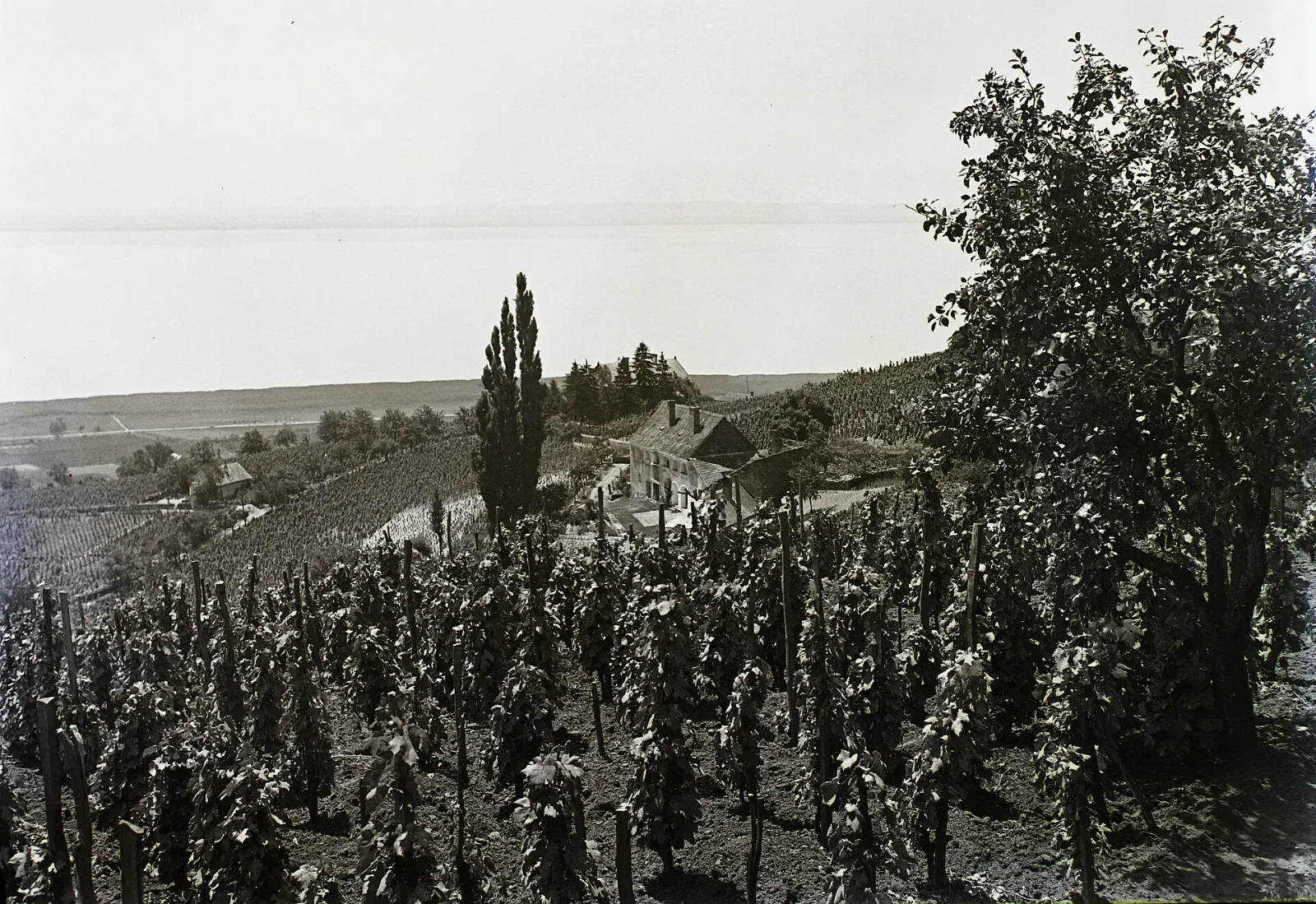
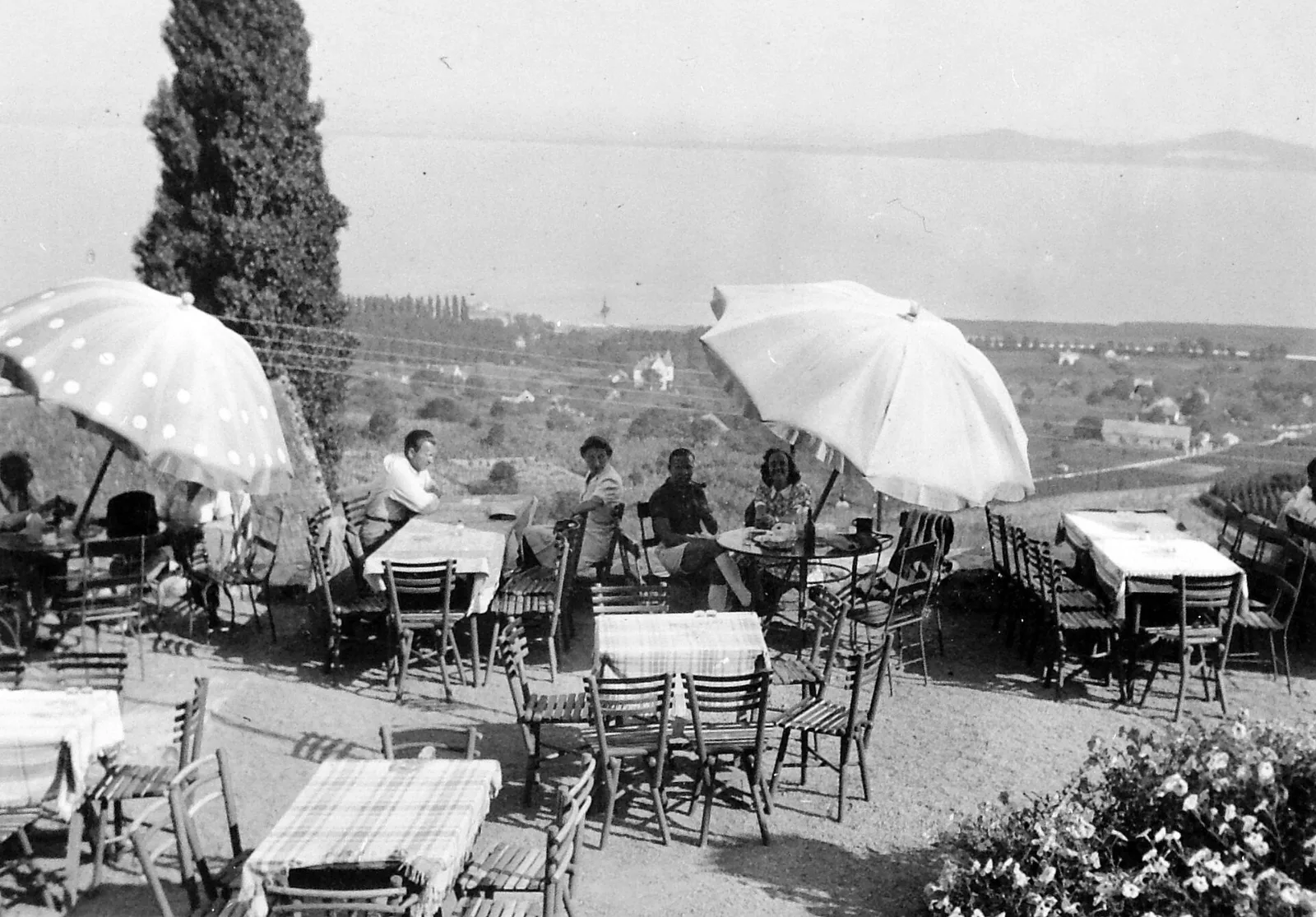
Kisfaludy’s former press house, the Kisfaludy House, stands above it on the hillside and has long been a restaurant. Postcards printed before 1945 already show its garden terraces. In 1935 about a hundred members of the Austrian Tourist Club held a wine tasting here. Postcard: the Kisfaludy House and its gardens (National Széchényi Library) · The Kisfaludy House in the BalatonEats guide
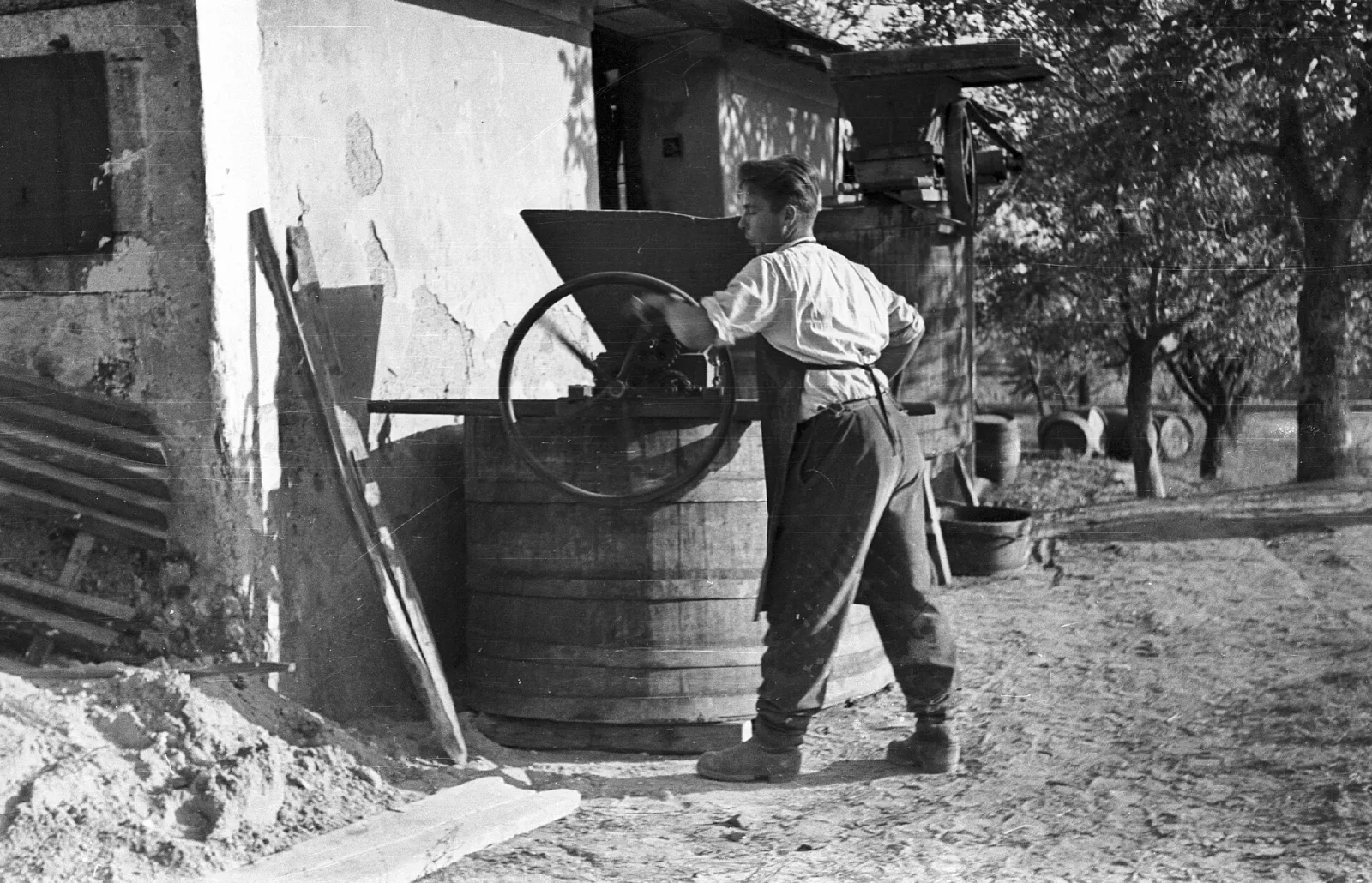
The bishop of Veszprém also spent his summers at the foot of the hill. János Ranolder’s villa in Badacsonytomaj still stands, and the cross on the hilltop, visible in the background of our opening photo, bears his name. The photo below of grape crushing was taken in the same year.
In the early 20th century Badacsony wine also travelled abroad. A Badacsony wine label made for export in 1908 survives and is now in the public domain.
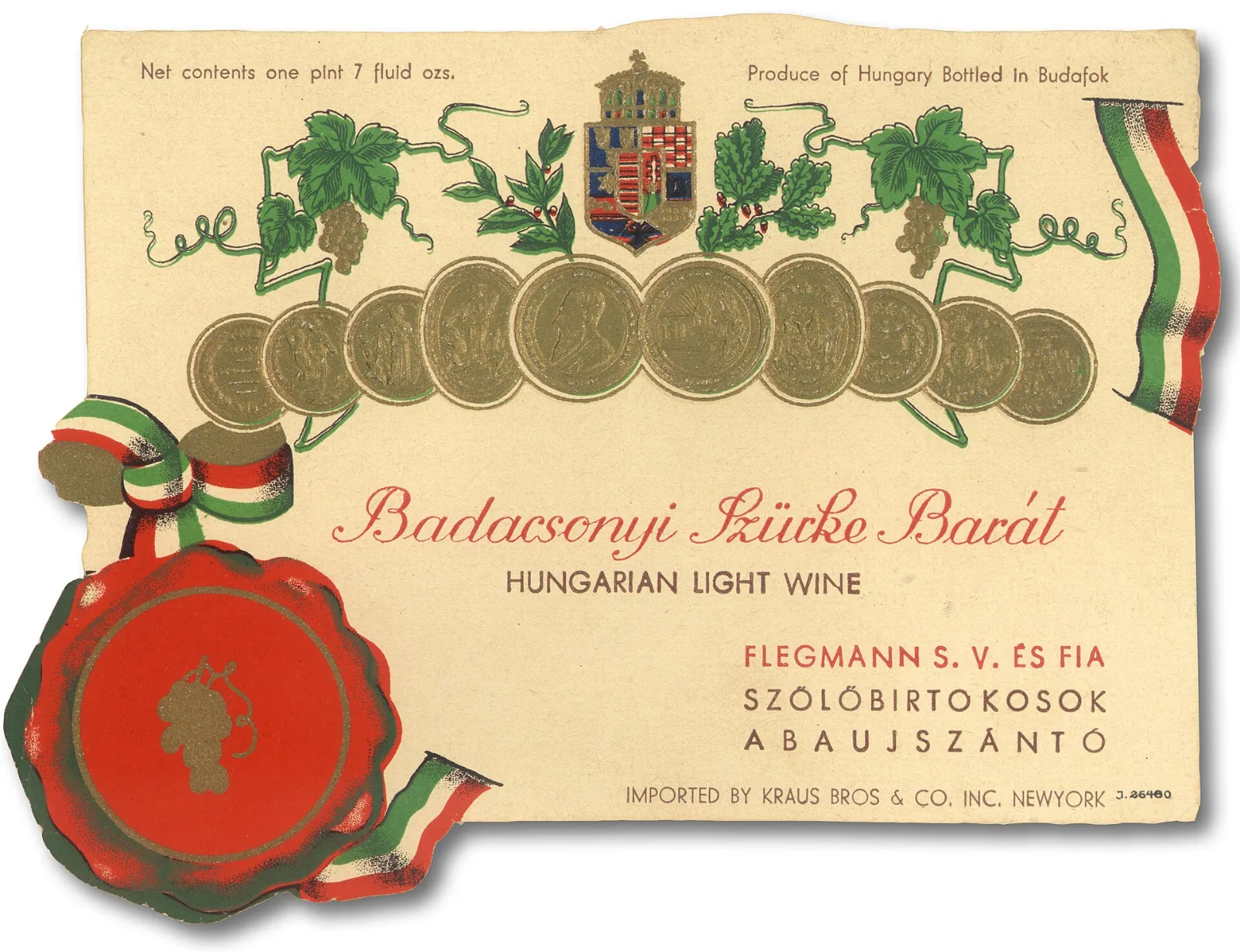
Kéknyelű, the “gentleman’s grape”
Kéknyelű is an ancient Hungarian variety grown almost only in Badacsony and the Balaton Uplands. Its name, “blue stalk”, comes from its bluish-red leaf stalk. It has only female flowers, so it needs a pollinating variety beside it, usually budai zöld. It yields little. That is why local growers mockingly called it the “gentleman’s grape”: it did not pay for anyone who lived off the size of the harvest, only someone who grew it for passion could afford it. Before phylloxera it was nevertheless a popular and expensive variety. Large-scale farming after the war favoured high-yielding varieties, kéknyelű declined, and the frosts of the 1980s thinned it further. In 2013 it was added to Hungary’s outstanding national values. A genetic study in 2006 also settled that it is not the same as Italian picolit. Kéknyelű, Hungarian Wikipedia
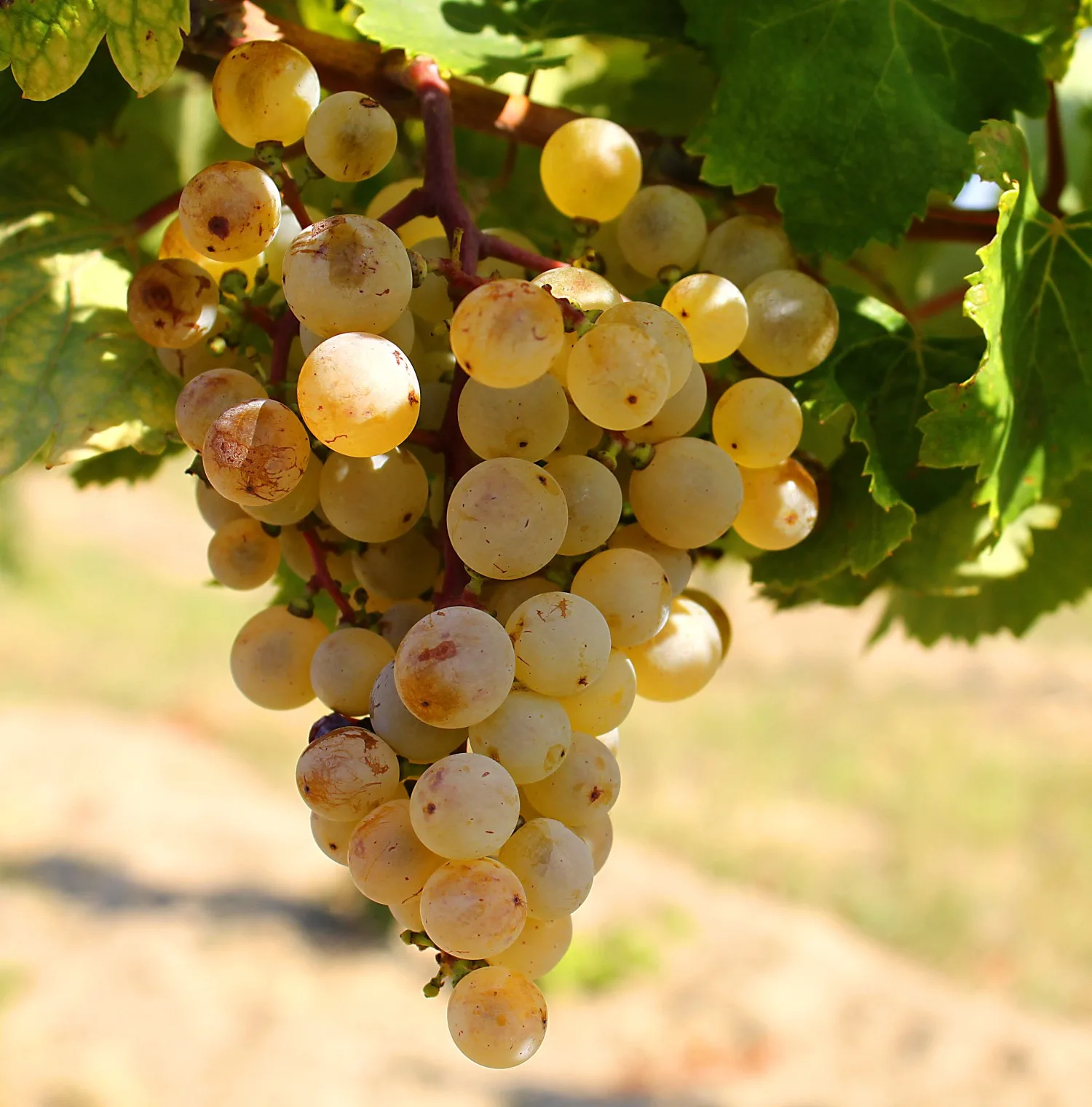
Since the early 2000s Badacsony has celebrated the flowering of kéknyelű every early summer. There is a local story about the name of szürkebarát (pinot gris) too. According to Kálmán Káloczi, the name was given to the wine in the 1930s by Vilmos Krassay, steward of the Esterházy entailed estate’s Badacsony vineyards, when the Pauline order returned to Hungary. The Esterházy estate was then the largest vineyard estate in the Balaton Uplands. Badacsony wine region, Hungarian Wikipedia
Füred and Csopak: balls, spa and olaszrizling
The first Anna Ball was held in Füred on 26 July 1825, in the Horváth House, in honour of Anna Krisztina, daughter of János Fülöp Horváth. By the mid-19th century Füred had become the capital of Balaton, where county and national notables made merry over the area’s white wines. What they ate with them is shown by an 1850s menu from Füred in our article on the history of Balaton hospitality. The Anna Ball in the Hungarikum Collection · Balatonfüred-Csopak wine region, Hungarian Wikipedia
In Csopak phylloxera destroyed the vineyards in the last quarter of the 19th century. According to the village’s heritage description, olaszrizling (Welschriesling) arrived here during the replanting and spread further from here. In 1984 the country’s third wine order was founded here, and in 2016 Csopak olaszrizling was added to the village’s local values. The local heritage description of Csopak olaszrizling · St. Donát in the BalatonEats guide
The wine hills of the south shore
Wine is old in Somogy too. When Somogy became the first Hungarian county to receive a coat of arms in 1498, it already featured grapes. At the end of the 18th century the poet Dániel Berzsenyi even made aszú wine on the Gombai-hegy near Marcali. Thanks to the loose soil, phylloxera did less damage here than elsewhere, yet the county’s vineyard area fell from 11,725 to 7,514 hold in forty years. Carbon disulphide depots were built in Balatonboglár, Karád and Kőröshegy, and extensive sand vineyards were planted around Balatonkeresztúr. Balatonboglár wine region, Hungarian Wikipedia
In 1956 the Balatonboglár State Farm, known as BB, was founded; it became one of the best-known wine companies in the country and trained many winemakers. The Boglár harvest parade has been held since 1976. Ordacsehi grows csabagyöngye, one of the earliest-ripening varieties in Europe, with picking starting in the first half of August.
Also in 1956, a listed press house built in the 1800s opened to the public in Fonyód. At the opening, a photographer of the Hungarian news agency MTI took pictures of guests drinking wine in the cellar and of a Gypsy band playing alongside the Balaton wines. Sándor Bojár’s 1956 photo in the Rippl-Rónai Museum collection
Where the press house became a restaurant
The Balaton press house was always more than a wine workshop. Vajkai noted of several press houses that families had lived in them for decades, as the big ovens suggested. After the harvest the new wine was tasted there, and guests were received there. In the 20th century this hospitality became a business: in Badacsony in 1959 there was already a wine bar above the park behind the railway station.
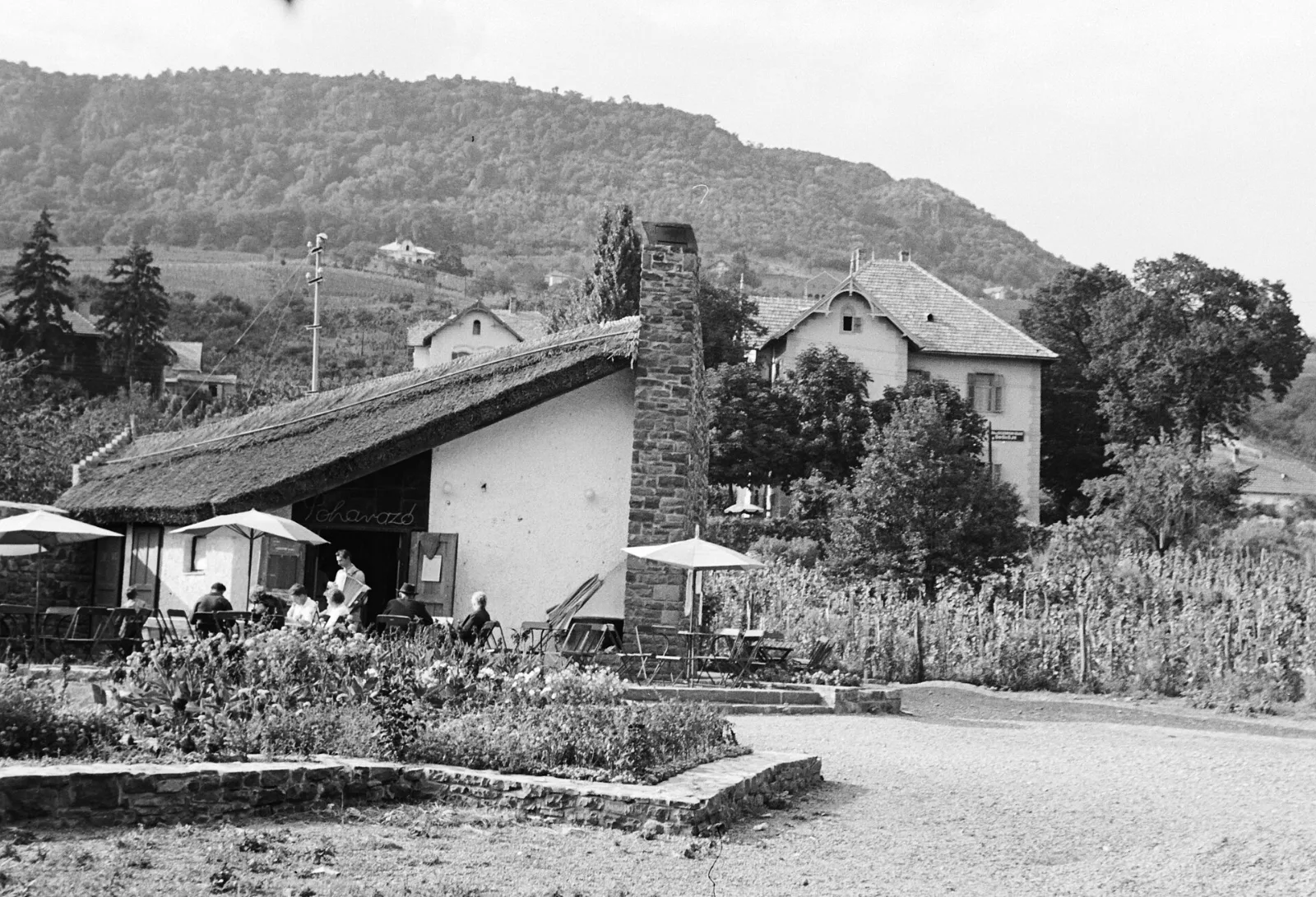
The story continues today. In Tihany the abbey’s cellar and press house, built in 1822, has been a restaurant since 2019. In Badacsonytomaj the Fata family bought an estate in 1927 and in 1988 laid the foundations of today’s restaurant in the house cellar. In Badacsonytördemic a wine bistro runs in a house from the 1800s, and in Salföld the village’s former school has become a restaurant and cultural centre. Tihanyi Vinarius · Borbarátok Étterem · Nefelejcs Borbisztró · Káli Fecske
Where can you see it today?
- Róza Szegedy House, Badacsonytomaj: a literary and wine museum in the former home of Kisfaludy and Róza Szegedy.
- Kisfaludy House, Badacsony: the poet’s former press house, now a restaurant with a terrace overlooking the whole lake.
- Darnay cellar, Gyenesdiás: a log cellar from 1644 with a 19th-century press house and a viticulture exhibition yard.
- Majthényi Présház, Balatonlelle: a press house and Saint Donatus chapel from 1784 on the Kishegy.
- Szent György-hegy: the area around the Lengyel chapel and the Tarányi press house, with press houses below the basalt organ pipes.
- Tihanyi Vinarius: the abbey’s former cellar and press house above the Inner Lake.
Opening photo: grape harvest in Badacsony in 1959, with the Ranolder Cross on the hilltop. Fortepan / Mészáros Zoltán · CC BY-SA 3.0. This article draws on the Hungarian Wikipedia articles on the wine regions, Aurél Vajkai’s research on press houses and the archival, museum and scholarly sources linked above.