Magazine
The history of Balaton hospitality from 1850 to the present
What did a spa guest in Füred eat in the 1850s? The history of Balaton hospitality, from zander with butter through the Tátika in Badacsony to today’s beach bistros.
In the 1850s, zander was served with butter and potatoes at the Great Inn in Füred. The dish can still be made out on the printed menu, a few lines above pike with anchovies. In the summer of 2026 in Fonyódliget, the guest opened the fish tin themselves. Inside was a freshly fried trout, and a little smoke rose from under the lid. Between the two lunches the railway reached the lakeshore, hotel rows grew out of the sand, and generations learned to eat fish off a paper tray.
Füred in the 1850s, through the eyes of a returning guest
József Kelemen, a canon from Pécs, took the cure with Füred’s mineral water. According to the surviving guest lists, he spent at least eight summers at the spa between 1839 and 1852. He kept playbills, menus and bills. On his 1844 account, alongside the lodging, the candles and the fodder for his horse are listed as separate items. Anyone going on holiday in those days also had to think about how to light their evenings and what their horse would eat while they took the waters.
The village of Füred lay on the hillside, and down on the shore was the Benedictines’ spa settlement, called Savanyúvíz (“sour water”). By the time Antal Mayer issued the Great Inn’s menu, guests could already go to a stone-built theatre, and a steamship called at the shore. The inn listed its fish dishes in German under a bilingual heading. Next to zander with butter and pike with anchovies there is roast carp too. The handwritten prices and the empty lines can also be seen on the original menu. The prints are kept today by the University of Pécs. The Füred collection and Kelemen’s bill
By train to Siófok, by steamer to Füred
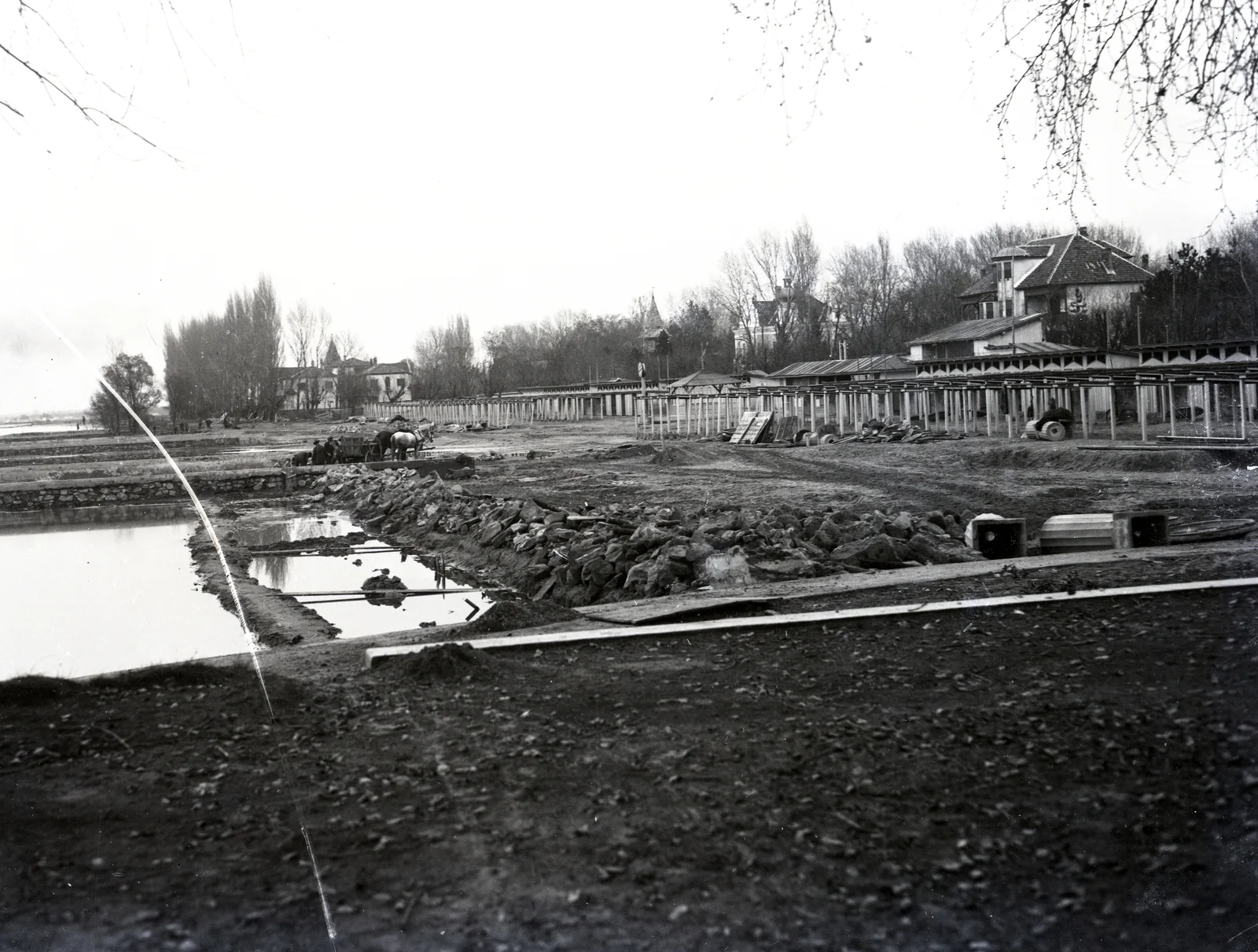
In 1861 the railway line between Buda and Nagykanizsa opened. Siófok got its station in 1863. Travellers heading for Füred could change here to the Kisfaludy steamer and arrive at the inns of the north shore from the water. Füred could only be reached directly by train from 1909. Meanwhile the south shore changing point also became a resort. Siófok’s bathing place was already advertised in the papers in 1866. The bathing company founded in 1891 bought and filled in wet, scrubby land. Building of the Sió and Hullám hotels began, and the new bathing resort was formally opened on 18 July 1893. Siófok’s historical overview
Where did the food come from for the multiplying south shore restaurants? In Berény and Szemes the answer is fairly precise. Count Imre Hunyady had villa plots parcelled out in both villages. In Berény he built a pier for his own steamer, which could be hired for excursions. The estate also took its share in supplying the kitchens. The market garden provided vegetables and fruit, the butcher’s shop the meat, and the wine came from the count’s cellar on the Baglas-hegy. Some village families earned new income by letting rooms. A holidaymaker’s lunch and night’s stay could thus provide earnings for several households in the village. Zoltán Kaposi’s study of the Hunyady estates
Carp with lemon and the building of a Siófok beach
In 1924 a guest at Sebesta és Sommer in Siófok could ask for carp with lemon. The kitchen also made stuffed kohlrabi and chicken pörkölt with tarhonya, and among the hot starters there was sorrel with fried egg. One item might need translating for today’s guest: “csirág” prepared Polish-style was asparagus. From this one menu we get to know the kitchen of one Siófok restaurant. How large the resort had grown in the meantime is recorded by other kinds of sources. The 1924 offer of Sebesta és Sommer
In the statistical yearbooks of the time, Siófok led Balaton’s visitor numbers in the second half of the 1930s. Behind it the order changed from year to year. In 1938 more guests were recorded in Balatonalmádi than in Keszthely, and more in Fonyód than in Füred. Anyone tracing the old Balaton restaurants should therefore look beyond the long-established spa towns. András Törzsök and co-authors on interwar visitor traffic
Holiday vouchers, beach kiosks and a patisserie over the water
At the end of the Second World War the front ran near Siófok for two months. Hotels, villas and ships were damaged. After the rebuilding the town became one of the centres of trade union and company holidays. For a family arriving with a holiday voucher, the dining room of the holiday home was part of the holiday. On the beach, meanwhile, lunch ran to a completely different rhythm. In the 1960s and 1970s more and more lángos fryers and lakeside kiosks served those who grabbed a bite between two swims. Fried fish on a paper tray deserves its own story. How sea hake made it into the Balaton fish fryers.
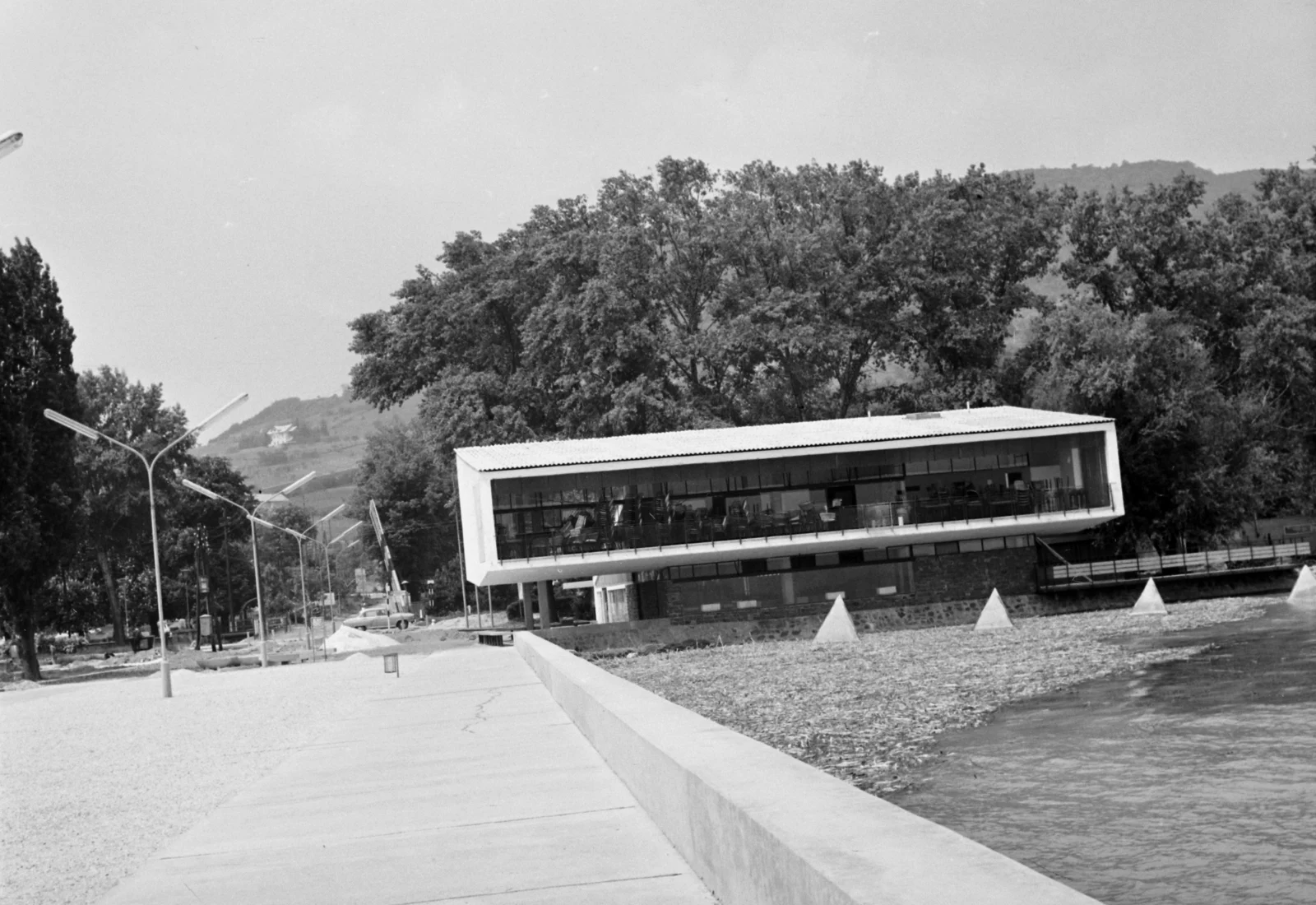
In Badacsony, day-trippers stepping off the boat could choose within a single building how much time to spend eating. Ferenc Callmeyer drew up the plan for the harbour area in 1958. Four years later, in the summer of 1962, the Tátika opened. On the ground floor arrivals were served quickly. Those who went up the stairs from the railway side found a patisserie, a music venue and a wine-tasting terrace. The upper floor originally projected about five metres over the water. In the opening photo the restaurant is barely a year old. The Hungarian Museum of Architecture on the Tátika plans
In the 1970s and 1980s the sign Zimmer frei on the gates of private houses announced a room to let. Csárdas and wine taverns were popular with foreign tourists. The same summer could be lived with completely different lunches by the guest of a company holiday home, the holidaymaker dropping into a csárda and the family queueing for lángos on the beach. In the Balaton Museum in Keszthely even the leaning counter typical of snack bars from this period has been recreated. The Balaton Museum’s tourism history exhibition
November 1992: the Kistücsök reopens
After the change of regime the mix of Balaton guests changed. Examining several decades of data, Réka Wilhelm found that the ratio of domestic to foreign guests was reversed. The change also showed in the number of guest nights. In the story of one restaurateur this period can be marked by a single unusual date. Balázs Csapody reopened the leased Kistücsök in Szemes in November 1992. The following year he put the garden in order, then extended the kitchen and renovated the wine cellar. He bought the restaurant in 1997. Changes in visitor traffic after 1990 · The story of the Kistücsök in Magyar Konyha
Chef László Jahni followed the seasons on the menu. The kitchen used whatever vegetables, fruit and herbs were growing at the time. The old Szemes inn thus became a place worth travelling to for the dinner itself. In 2021 rooms and a chef’s room with an open kitchen opened next to it. A hundred years earlier, the bathing resort had needed a restaurant. In Szemes, this time, the accommodation was built next to a restaurant that was already running. The 2021 extension · The Kistücsök in the BalatonEats guide
The age of beach bistros, from Fövenyes to Fonyódliget
The Balaton food revolution faced a very tangible test on the beach. Someone had to come up with something good to eat in swimwear, on the shore. When the Beach Dish of the Year award was first presented in 2015, the Kalóz Strandbisztró in Fövenyes won with catfish and potatoes. It was made on the model of British fish and chips, but with a fish familiar to Balaton guests. The history of beach food in the Hungarian National Digital Archive
In 2026 the award went to the trout of Lokal at the Lake in Fonyódliget. The fish came from Panarini near Keszthely, the idea of serving it in a tin from Lisbon. The bistro fried and filleted the trout, added dill and pickled red onion, and before serving sealed a little smoke under the lid. Antal Mayer’s Füred menu kept only a handwritten price as a trace of a summer lunch. Of the Fonyódliget fish it was also recorded which farm it came from, and what happens at the moment the guest opens the tin. The 2026 winning dish in the Balatoni Kör report
Our opening photo shows the Tátika restaurant in Badacsony in 1963. Fortepan / Hunyady József · CC BY-SA 3.0. The magazine displays the image in a landscape crop.