Magazine
How did Balaton hake become the beach kiosks’ favourite?
The history of Balaton hake, from the fish fryers of the seventies to András büfé in Szemes. Why was it sold as pike, and how did it end up next to zander on the menu board?
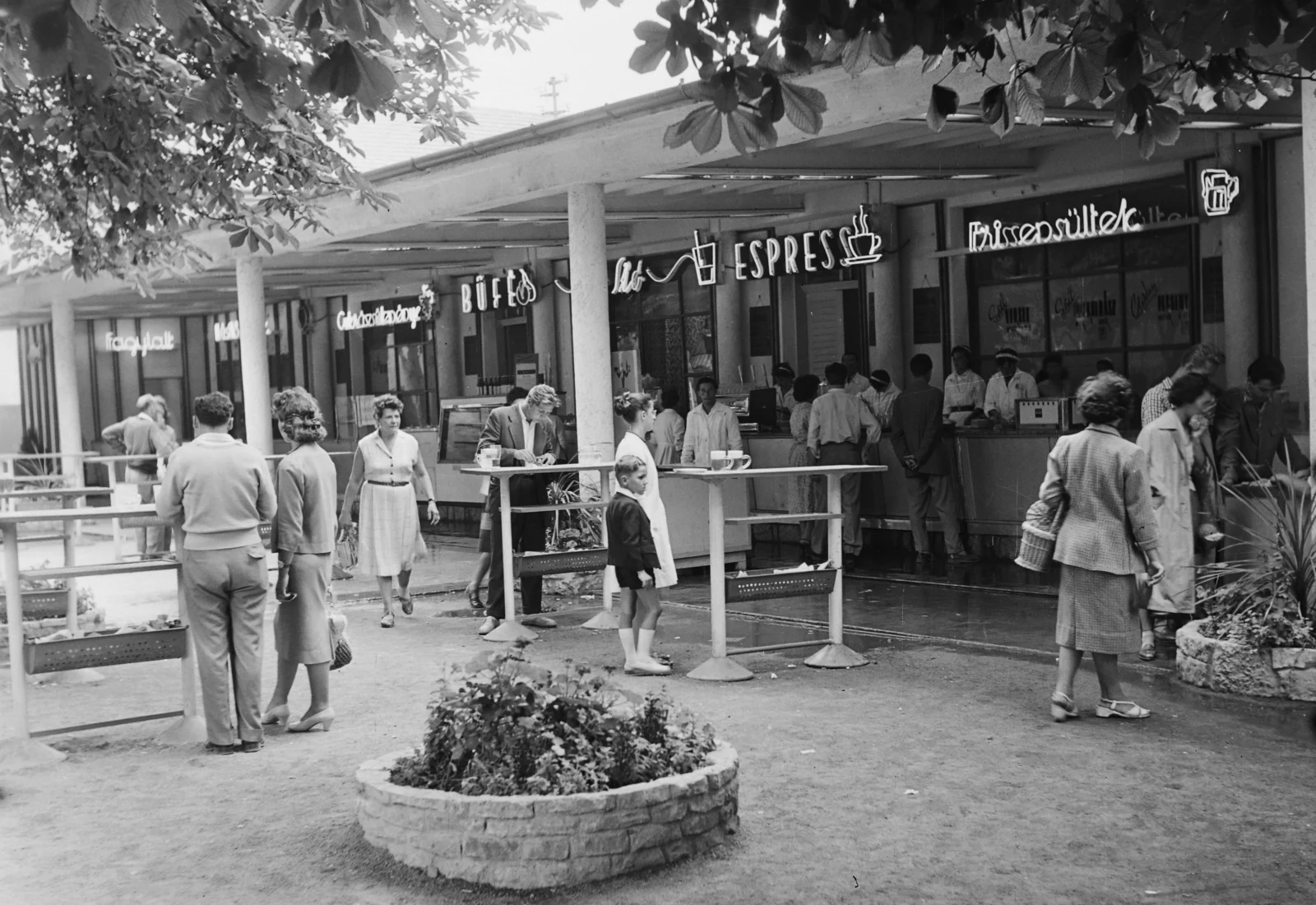
The story of a newcomer from the sea.
Rolled in paprika flour, fried in hot oil, with white bread and sour pickles. For many people the smell of Balaton hake alone brings the beach to mind. Yet the fish is a sea predator. How did it get onto the counters of the Balaton fryers, and why did it find such loyal customers there of all places?
What was fried before hake?
In Balatonfüred the fish fryers once sold zander, bream, carp and sichel. Restaurants treated the same fish differently. János Rácz’s local history writing mentions bream with thyme, pike with horseradish and catfish with almonds. The history of Füred’s fish dishes is much more varied than what a beach kiosk menu board recalls today.
People in Pest could come across the name “sea pike” soon after 1900. According to Ádám Geri’s food history research, a fish of that name was on sale in the Great Market Hall in 1904, and in 1905 it appeared in an advertisement by the merchant János Borhegyi. The advertisement does not reveal the exact species. The next trace in the history of the Balaton beach dish turns up decades later, in the state fish trade.
Carp went out, frozen sea fish came in
In the 1960s Hungarian pond carp travelled abroad by rail. István Földényi, director of the Fish Marketing Company (HALÉRT), wrote in Figyelő in 1965 that between 1962 and 1964 the fish harvest fell while exports grew. Balaton fryers meanwhile faced a different problem. According to János Rácz, in the seventies they got less bream, and at higher prices. For the kiosk owner, one big advantage of frozen sea fish was that the next delivery could be ordered regardless of the local catch.
In 1971 HALÉRT and the importer TERIMPEX were looking for cheaper sources. Esti Hírlap, quoted by Ádám Geri, reported 45 wagons of Soviet and 27 wagons of Bulgarian sea fish. The two shipments contained different fish. The Soviet goods were listed as stavrida (horse mackerel), while the fish bought from Bulgaria was sold as “hek” for 18 forints a kilo.
The 29 July 1971 issue of Hajdú-Bihari Napló also tells us what became of the imported fish at the shop counter. By then the HALÉRT shop in Debrecen had been selling the Bulgarian “HEK” and the Soviet stavrida for a month. The paper compared both to zander. The Debrecen report documents the fish’s appearance in shops. The Balaton fryers come up in reports from the following years.
A journalist on the trail of the “pike”
Two years later a reporter for Fejér Megyei Hírlap was already writing about queueing guests and fish frying in paprika flour. He saw hake as particularly popular and compared its taste to zander. The prices cited by Ádám Geri also explain the choice. A kilo of zander then cost roughly twice as much as hake.
In 1974 a Népszava journalist started tasting next to the bus station in Hévíz. The board said pike, and the fish handed to him had no head. At the level crossing in Badacsony he got something similar. In the evening, at the fryer opposite the fishermen’s csárda in Balatonfüred, the vendor finally told him that he was selling sea fish. He found three different prices at the three counters. This one trip already shows that by the mid-seventies Balaton guests could meet the same dish in several places, even under different names.
We recall the reports of Figyelő, Esti Hírlap, Fejér Megyei Hírlap and Népszava based on Ádám Geri’s press review published on GasztroRégész.
What fish do we get when we ask for hake?
The kiosk board shows a single short word, but in the fish trade the species has a name too. Argentine hake (Merluccius hubbsi) lives in the south-western Atlantic. Its relative, European hake (Merluccius merluccius), occurs in the eastern Atlantic and the Mediterranean. Both are sea fish. The 1971 reports named the supplying country but not the fish’s scientific name.
The Argentine connection is documented by later accounts from the Hungarian fish trade that name names. In 2016 Index asked importers which fish bodies the kiosks buy. Besides Argentine hake they also mentioned goods of other origins. So “hake” written above the counter does not by itself tell you where the fish was caught.
Donkey fish, sea pike, hake
The names were explored by the linguist János Rácz. Csacsihal (“donkey fish”) and tengeri csuka (“sea pike”) are older Hungarian names. In his view, foreign traders may also have played a part in establishing today’s familiar “hekk”. He considered both the Russian fish name and the English word hake. In the Debrecen report the name was still printed with a single k.
Why did it work at the fryer?
Eating bream takes some practice. You have to find the morsels between fine bones. The white flesh of fried hake lifts easily off the spine. On the other side of the counter, what mattered was that the cleaned, headless fish was easy to prepare, and its flesh held together during frying. A lunch served quickly suited the fryer, and an easy-to-eat fish suited the beachgoer.
In Balatonszemes, András Vincze took over in 1982 a shop that had earlier been a milk bar and then a lángos stand. Forty years later HVG found his son, Attila, at the fryer. The father recalled that at first they separated the fish from 33-kilo frozen blocks. At the time of the 2022 report they were getting individually packed hake from Argentina. The family stuck to its own spice mix, the sourdough bread and the pickles. Alongside hake they also fried bream and zander.
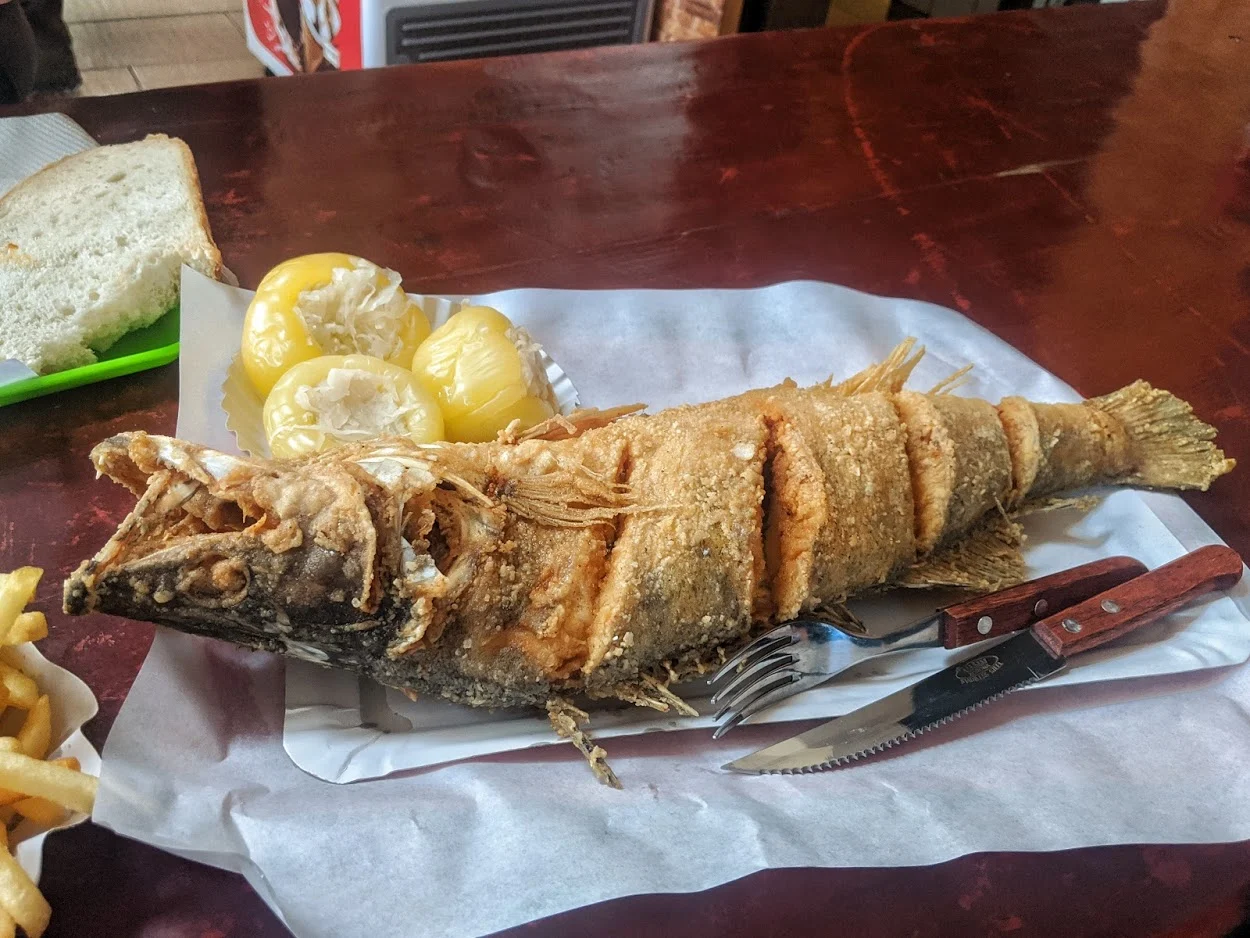
Hake and fogas still share a menu today
The Szemes story has a counterpart across the lake. On the 2026 menu of the Lepke Étterem in Tihany, next to the Gödrös beach, whole hake sits alongside skin-on fried fogas (Balaton zander) fillet and catfish. At the same beach, Csíkos Hattyú serves breaded fogas with truffle mayonnaise. One beach, two kitchens, and already several answers to what Balaton fried fish should be like.
Hake had been known in Budapest for longer; in the kiosks its price and ease of handling spoke for it. But for it to be called a Balaton dish, it also took the families standing at the fryer and the guests who came back to the same counter the next summer.
Sources
- Hajdú-Bihari Napló, 29 July 1971, issue 177. A contemporary report from the Fish Marketing Company’s shop in Debrecen. Digitised issue.
- Ádám Geri (2024). How did sea hake get into the Balaton kiosks? GasztroRégész. Excerpts from contemporary papers and historical background.
- János Rácz (2018). The names of the most popular “Balaton” fish. Füredi História, 2018/2, pp. 7-11. Local history and the origin of the fish name.
- European Commission. Species sheets for Argentine hake and European hake, with commercial names and fishing areas.
- The image of Balaton hake is built on hake. Index, 2016. A report on the Hungarian fish trade.
- Mercédesz Gyükeri (2022). The legendary Balaton hake that even rising prices cannot beat, only the Sunday schnitzel. HVG. An on-site report from András büfé in Balatonszemes.
Opening photo · The row of kiosks next to Siófok railway station in 1959, before hake spread around Balaton.FORTEPAN / Bauer Sándor, 126625 (CC BY-SA 3.0). The magazine uses a landscape crop.