Recipe
Walnut and poppy seed bejgli: no cracks, plenty of filling
Short, buttery pastry, a thick walnut or poppy seed filling and a marbled top: Hungarian Christmas bejgli step by step, with the tricks against cracking. And where to get artisan bejgli at Lake Balaton.
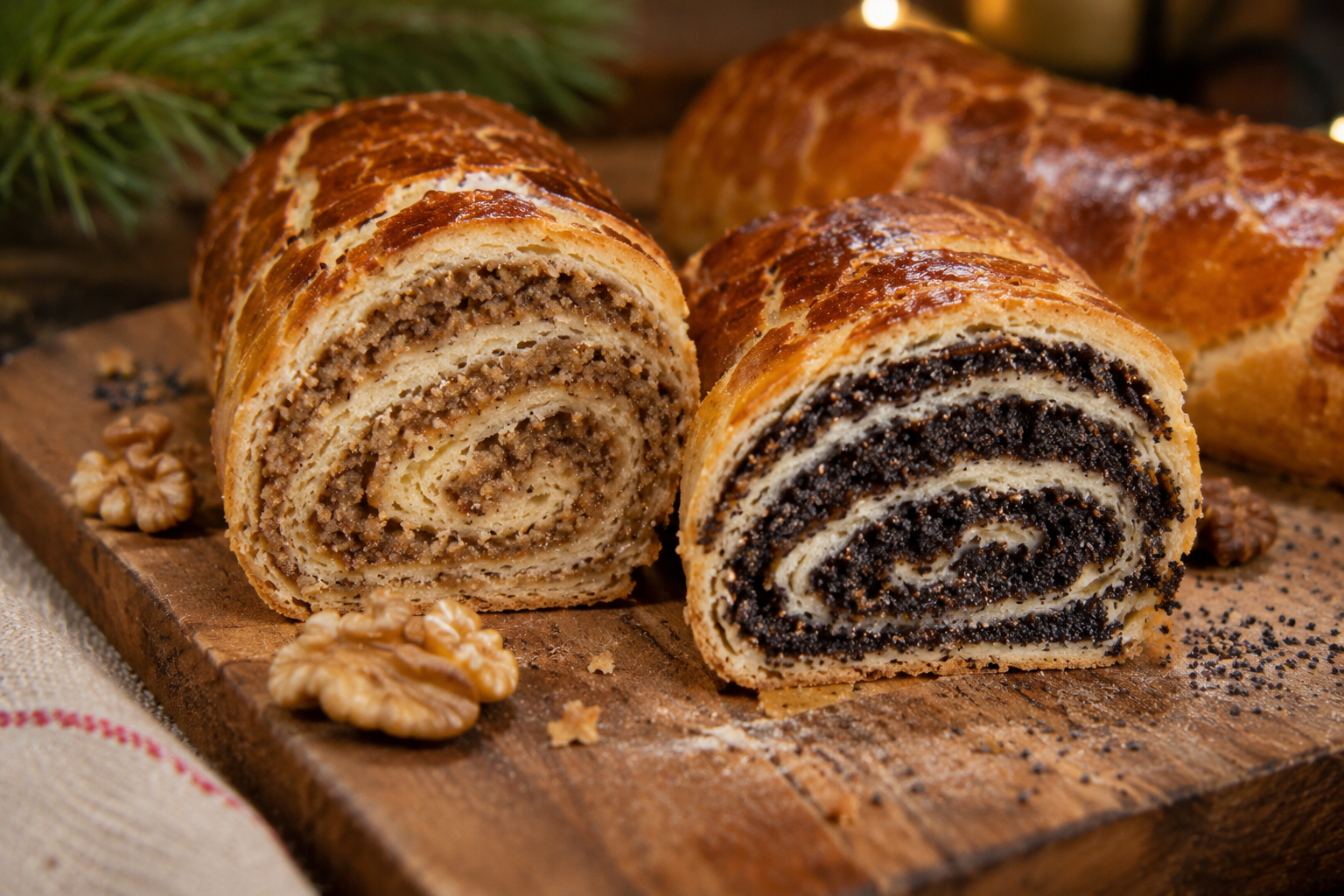
In Hungary, Christmas without bejgli is not Christmas. In December every kitchen asks the same question: will it crack this year? The walnut and poppy seed rolls line up in the pantry, are cut into thin slices for the plate, and everyone secretly checks which one has more filling.
A good bejgli has thin, short pastry, a thick, moist filling and a shiny, marbled top. It is not hard, but it does not like to be rushed. The secret is in the resting: both the dough and the egg glaze need time.
Why walnut and poppy seed?
Bejgli spread through Hungarian middle-class cooking in the 19th century and has relatives across Central Europe, the closest being the Pozsony crescent. According to folk belief, the two classic fillings are no accident: walnut protects against curses, poppy seed brings abundance for the new year.
Today there are chestnut, plum and even pistachio versions, but on the Christmas table walnut and poppy seed are the foundation. Several patisseries and bakeries around Lake Balaton bake it before the holidays, and it is worth ordering in good time.
Ingredients
For the dough (4 rolls)
- 500 g plain flour
- 200 g cold butter
- 50 g lard (or more butter)
- 50 g icing sugar
- 15 g fresh yeast
- 100 ml cold milk
- 2 egg yolks
- 1 pinch of salt
For the walnut filling (2 rolls)
- 300 g ground walnuts
- 150 g sugar
- 100 ml milk
- 50 g raisins
- 1 tbsp honey
- zest of half a lemon
- 2 tbsp breadcrumbs
For the poppy seed filling (2 rolls)
- 300 g ground poppy seeds
- 150 g sugar
- 150 ml milk
- 50 g raisins
- 1 tbsp honey
- zest of half a lemon
- 1 tbsp apricot jam
For glazing
- 2 eggs (yolks and whites separated)
Method
- Rub the flour with the cold butter and lard, add the icing sugar and salt. Dissolve the yeast in the cold milk and, together with the yolks, quickly work everything into a smooth dough. Divide into four equal pieces, cover and chill for at least an hour.
- For the fillings, bring the milk to the boil with the sugar and honey, pour it over the walnuts or the poppy seeds and stir in the other ingredients. Leave to cool completely: warm filling cracks the pastry.
- Roll each piece of dough into a rectangle of about 25 × 30 cm, 3–4 mm thick.
- Spread the filling evenly, leaving a finger-wide strip bare at the edges. Fold in the two shorter sides, then roll up firmly but not tightly.
- Place the rolls seam-side down on a lined baking tray, well apart. Brush with egg yolk and leave in a cool place to dry, about 30 minutes.
- Brush with egg white and wait until this dries too, another 30 minutes. This gives the marbled finish. Prick deeply in several places with a skewer so the steam can escape.
- Bake in an oven preheated to 180 °C for 30–35 minutes until deep golden. Cool completely and slice only the next day.
Where to eat it at Lake Balaton
If you are not baking this year, several places around Lake Balaton sell artisan bejgli before the holidays. It is worth asking and ordering ahead.
For holiday planning: Christmas and New Year’s Eve at Lake Balaton and the Balaton Advent markets. Bejgli’s partner: zserbó.
Bejgli is not just one cake among many. It is what makes the kitchen smell of Christmas in mid-December.