Story
Bejgli of the Year 2026: gold in Siófok, silver in Balatonlelle
Cashew, coriander and dried apricot: the Téli napsugár bejgli from Dinasztia in Siófok is Hungary's best gourmet bejgli, and the walnut bejgli from Geleta in Balatonlelle took silver. The story of bejgli, and our recipe for the 2027 contest.
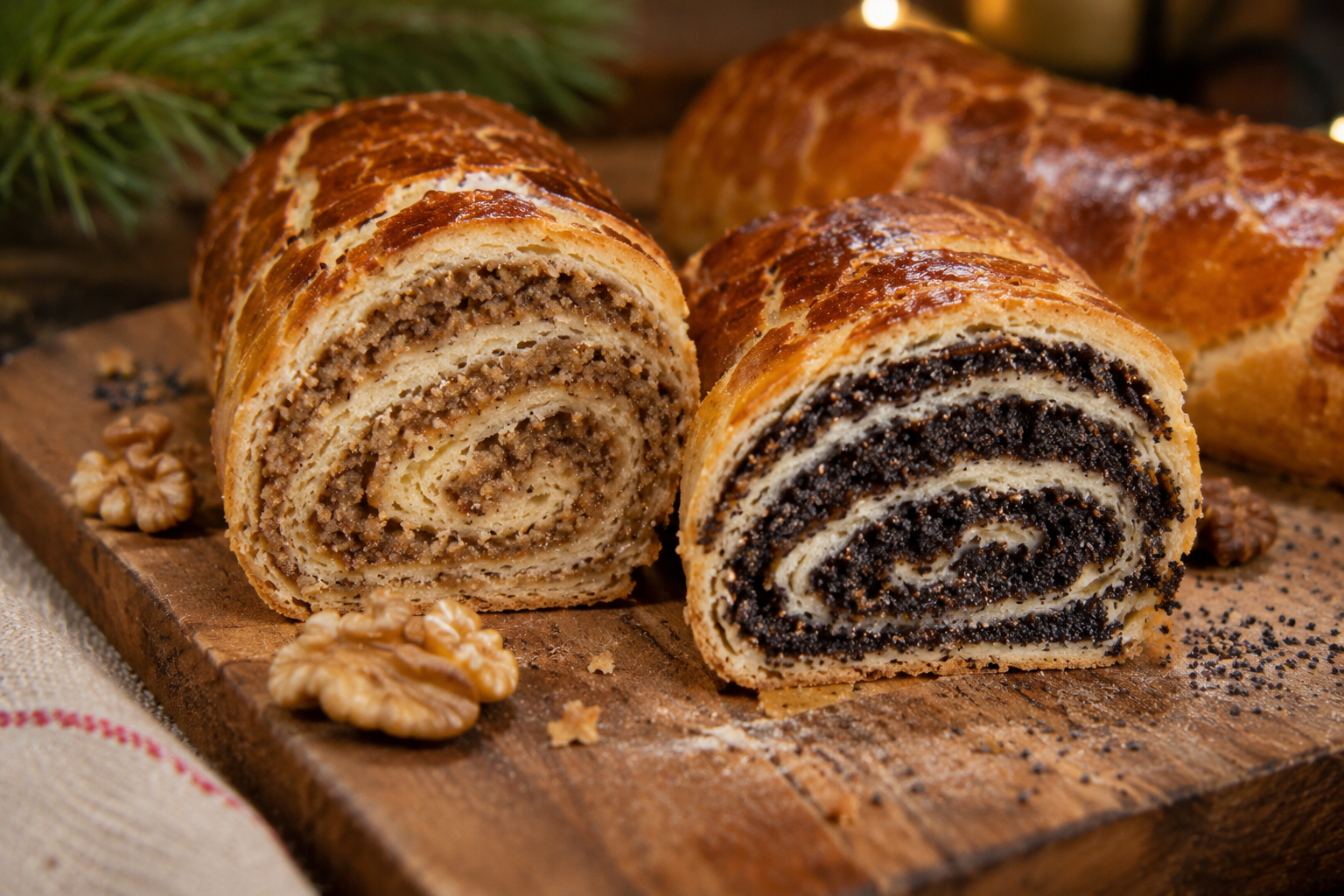
Caramelised cashew, freshly ground coriander and dried apricot. If that does not make you think of bejgli, Hungary’s traditional Christmas roll, you are not alone, yet in 2026 exactly this filling won the gold medal for the country’s best gourmet bejgli. The roll, called Téli napsugár (Winter Sunbeam), is made in Siófok, in the workshop of Dinasztia Cukrászda. The silver medal in the traditional walnut category landed just over thirty kilometres away in Balatonlelle, at Geleta Cukrászda. Two of the nine medals are on the south shore of Lake Balaton, a strong argument for a detour to the lake in December.
Sixty-seven bejgli, nine medals
This year the Hungarian Confectioners’ Guild (Magyar Cukrász Ipartestület) held its Bejgli of the Year (Év Bejglije) competition for the seventh time, open to patisseries, restaurants and artisan bakeries. It is the same trade body that runs the Cake of Hungary and Ice Cream of the Year contests. There were three categories: traditional walnut, traditional poppy seed and gourmet. The jury tasted a record 67 bejgli, and one of the jurors came from the lake too: Gabriella Bergmanné Gutman of A kis Bergmann Cukrászda in Balatonfüred.
The rules are strict, because bejgli is a protected product in the Hungarian Food Codex. In the gourmet category imagination is free, but the character of the filling may only come from ingredients listed in the regulation: chestnut, walnut, poppy seed, fruit, chocolate, spices, honey, nuts and seeds. This year’s entrants tried everything from pecan through juniper and tonka bean to chamomile.
Siófok: gold for the second time
The Gourmet Bejgli of the Year award went to Renátó Millei, confectioner at Dinasztia, for Téli napsugár. The name fits: the warm, sunny flavours of apricot and cashew are lifted by the citrusy, gently spicy scent of coriander. It is not Renátó’s first medal of this kind. According to the patisserie, he already won the same category in 2023 with a bejgli called Adventi Pirkadat (Advent Dawn), so winning rolls are slowly becoming a tradition in the Siófok workshop.
Good news for those who want more than to read about it: in December Dinasztia bakes both winning bejgli alongside the usual walnut and poppy seed ones. The patisserie is closing a good year anyway: in summer its cake Eprek hercege (Prince of Strawberries) finished third in the Cake of Hungary competition.
Balatonlelle: silver in the hardest genre
In the traditional walnut category there is nowhere to hide. No unusual spice, no surprising fruit, just pastry, walnut and proportions. This is where Balázs Geleta, owner and namesake of Geleta Cukrászda in Balatonlelle, took silver, behind REÖK Kézműves Cukrászda of Szeged and ahead of a Budapest patisserie. Anyone who knows Geleta will not be surprised: in this family patisserie beside main road 7, the classics are taken as seriously as the modern desserts, and bejgli is on the counter every winter.
Where does bejgli come from?
The name is of German origin, from Beugel, meaning a bent, horseshoe-shaped pastry. The most common explanation is that it reached Hungary through Silesian and Viennese kitchens and became a fixture of the Hungarian middle-class Christmas in the second half of the 19th century. Its close relative is the Pozsonyi kifli (Bratislava crescent), also made with walnut and poppy seed, only smaller and horseshoe-shaped.
Folk belief stands behind the two classic fillings: walnut protects against bad spells, and poppy seed, with its countless tiny grains, brings abundance for the new year. The home baker’s nightmare has stayed the same ever since: a cracked top. That is why we prick it, why we brush it with egg twice, and why we peek carefully through the oven door in December.
Our bejgli, and the battle plan for 2027
We have our own recipe too: walnut and poppy seed bejgli, without cracks and with plenty of filling. To be honest, it probably will not be as good as what Renátó or Balázs Geleta bake. They do this for a living; we just love it very much. It is definitely worth a try, though, and getting it out of the oven without a crack feels almost like a medal.
In fact, we have a plan. We would like to enter the 2027 competition with this recipe, or at least with a slightly crazier version of it. Ideas are piling up: Balaton almonds next to the walnut, a touch of Tihany lavender in the poppy seed, perhaps raisins soaked in Olaszrizling. Two small things still stand in our way. One is that the Food Codex has to approve the filling. The other is that only patisseries, restaurants and bakeries may enter, so we would have to open one first. Until then we bake, taste and cheer for the Balaton teams.
Where to taste them
For Téli napsugár and Adventi Pirkadat, head to Siófok, to Kálmán Imre sétány: Dinasztia Cukrászda is open Tuesday to Sunday. For the silver-medal walnut bejgli, go to Balatonlelle, to Geleta Cukrászda, which is open every day. Before the holidays it is worth ordering in good time at both, because an award-winning bejgli sells out fast in December.
Sources: the announcement of the Bejgli of the Year 2026 results by the National Federation of Craftsmen’s Corporations (IPOSZ, 19 November 2026), and the announcements of Dinasztia Cukrászda and Geleta Cukrászda.